The Home Upgrade That Actually Changes How You Use a Space Every Day
Most home improvements change how a space looks. A fresh coat of paint, new flooring, updated light fixtures — these make a real difference to the appearance of a room, and appearance matters. But there’s a category of improvement that does something harder to achieve: it changes how you actually behave in a space, every day, without you having to think about it.
That category is storage — specifically, storage that’s designed around how you actually use the room rather than storage that gets added after the fact in whatever form fits the remaining space.
The Morning That Takes Longer Than It Should
Here’s a routine that will be familiar to a lot of people: wake up, go to the wardrobe, spend two or three minutes looking for a specific item that’s somewhere in the pile, find something close enough, leave the house slightly later than planned. Repeat tomorrow.
This isn’t a discipline problem. It’s a storage design problem. When clothing lives in a space that doesn’t distinguish between different categories — hanging items, folded items, shoes, accessories, items worn weekly, items worn seasonally — every retrieval requires a search, and every return requires a decision about where it goes. Over a week, this low-grade friction adds up to a meaningful amount of time spent managing the wardrobe rather than using it.
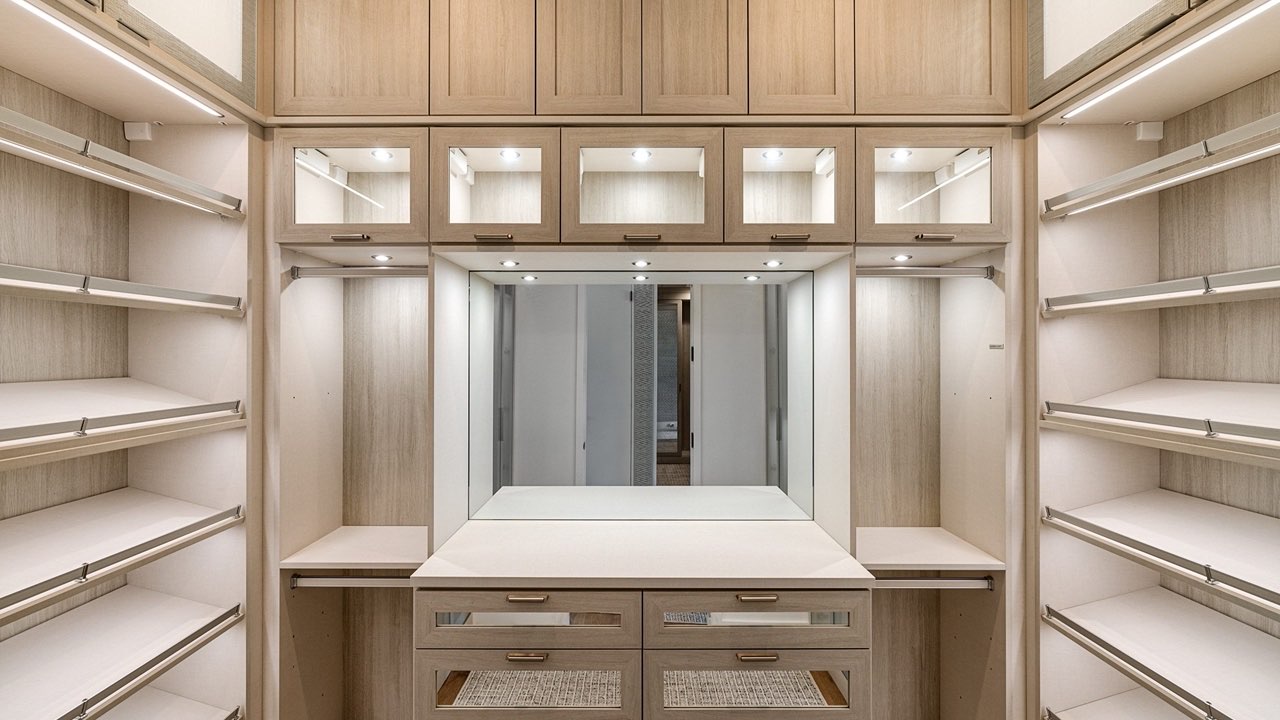
A wardrobe configured around the specific clothes it holds changes this entirely. Hanging rails at heights that suit what’s actually hung on them. Shelf depths sized for folded items without wasted space. Drawers for the things that don’t hang. Dedicated spots for shoes, for bags, for accessories. When everything has a place, putting things away becomes fast — which means things get put away, which means finding them is also fast.
The time saved isn’t dramatic per individual interaction. Over a year, it’s substantial, and the stress reduction is continuous.
The Kitchen That Stopped Fighting Back
A badly organized kitchen is one that you work around rather than with. The pan you need requires moving two other pans to get to it. The spices are stored in a way that requires reading every label to find the right one. The items used daily are in the same drawer as items used monthly, which means the daily items have to be excavated from the monthly ones every time.
When kitchen storage is designed around actual cooking workflows — frequently used items within reach of where they’re used, pans stored so they’re accessible without unpacking, dry goods visible rather than buried — cooking in that kitchen is measurably faster and less annoying. This sounds like a small thing until you’ve cooked in a well-organized kitchen and then gone back to a poorly organized one.
The improvement that creates this result isn’t a bigger kitchen. It’s a kitchen where the cabinet configuration was designed around what goes in it, at the point where those decisions are still possible to get right — before installation, not after.
The Living Space That Stopped Accumulating Clutter
Clutter accumulates in homes not because the people who live there are disorganized but because objects don’t have designated places. Mail lands on the counter because there’s nowhere obvious for mail to go. Bags go on the floor by the entrance because there’s no hook or shelf at the right height. Books accumulate on every surface because the bookshelf filled up three years ago and hasn’t been addressed since.
The solution to accumulation isn’t discipline. It’s sufficient storage, in the right locations, in forms that match the objects being stored. A hallway unit with hooks, a shelf for bags, a drawer for the things that come in from outside every day — eliminates most entrance clutter permanently. Built-in shelving that’s actually sized for the books, objects, and equipment it needs to hold eliminates the overflow that lands on surfaces.
This is the upgrade that changes behavior without requiring a behavioral change. When putting something away is as easy as putting it down — because the place to put it is right there, sized correctly, at the right height — things get put away. The clutter stops accumulating not because anyone tried harder but because the environment no longer makes accumulation the path of least resistance.
Why This Category of Improvement Gets Delayed
Storage improvements get delayed for a few reasons. They’re not glamorous in the way that new flooring or a kitchen backsplash is glamorous. They require more upfront planning than buying a piece of furniture. And the benefit is behavioral rather than visual — it’s hard to photograph a morning routine that runs smoothly.
But the return on a well-designed storage system, measured in time and daily friction, is usually higher than the return on the same investment spent on visible upgrades. A beautiful room that’s hard to keep tidy gets messy. A functional room that’s easy to maintain stays the way it looks.
The other reason this category gets delayed is that it’s often treated as a late decision — something to figure out after the walls are painted and the floors are down. In reality, storage that’s truly integrated with the space — built-in wardrobes, kitchen cabinets that use the full height of the room, bathroom vanities with configured interior storage — needs to be decided before the room is finished, not after.
For anyone planning a new home or a renovation, it’s worth thinking about the storage in each room before thinking about the surfaces. The surfaces age in place. The storage determines how the room works every day for as long as you live there.
For a sense of what’s possible across different room types — kitchen, wardrobe, bathroom, living room storage — explore PIANO products to see how integrated cabinetry across a whole home is approached by a manufacturer that covers all of those categories under one scope. The rooms that are easiest to live in are the ones where the storage was designed to work, not just to fit.